
Search intent & keyword priorities
Understand how customers describe their needs. Group relevant searches around your services and the pages best placed to answer them.

 ATC GroupTechnology · Design · Marketing
Choose your language
Design & marketing
Help the right customers discover your business through search. ATC connects technical improvements, useful content and search intent with the pages that lead to real enquiries.
Weeks within each period
Visibility and click-through together show whether more searchers are choosing the website.
| Device | Clicks | Impressions | CTR |
|---|---|---|---|
| Mobile | 1,638 | 36,400 | 4.50% |
| Desktop | 585 | 13,000 | 4.50% |
| Tablet | 117 | 2,600 | 4.50% |
No matching rows.
Illustrative interface and data. No live account connected.
Weeks within each period
Connect organic discovery to enquiries: follow visits to the menu, restaurant and reservation pages.
| Landing page | Sessions | Key events | Rate |
|---|---|---|---|
| /menu | 700 | 7 | 1.00% |
| /restaurant | 420 | 3 | 0.71% |
| /reservations | 280 | 4 | 1.43% |
No matching rows.
Sample goal: booking request. One request per converting session; these are not confirmed reservations.
Illustrative interface and data. No live account connected.
Illustrative interface and sample data. Not a client case study or a connected account.
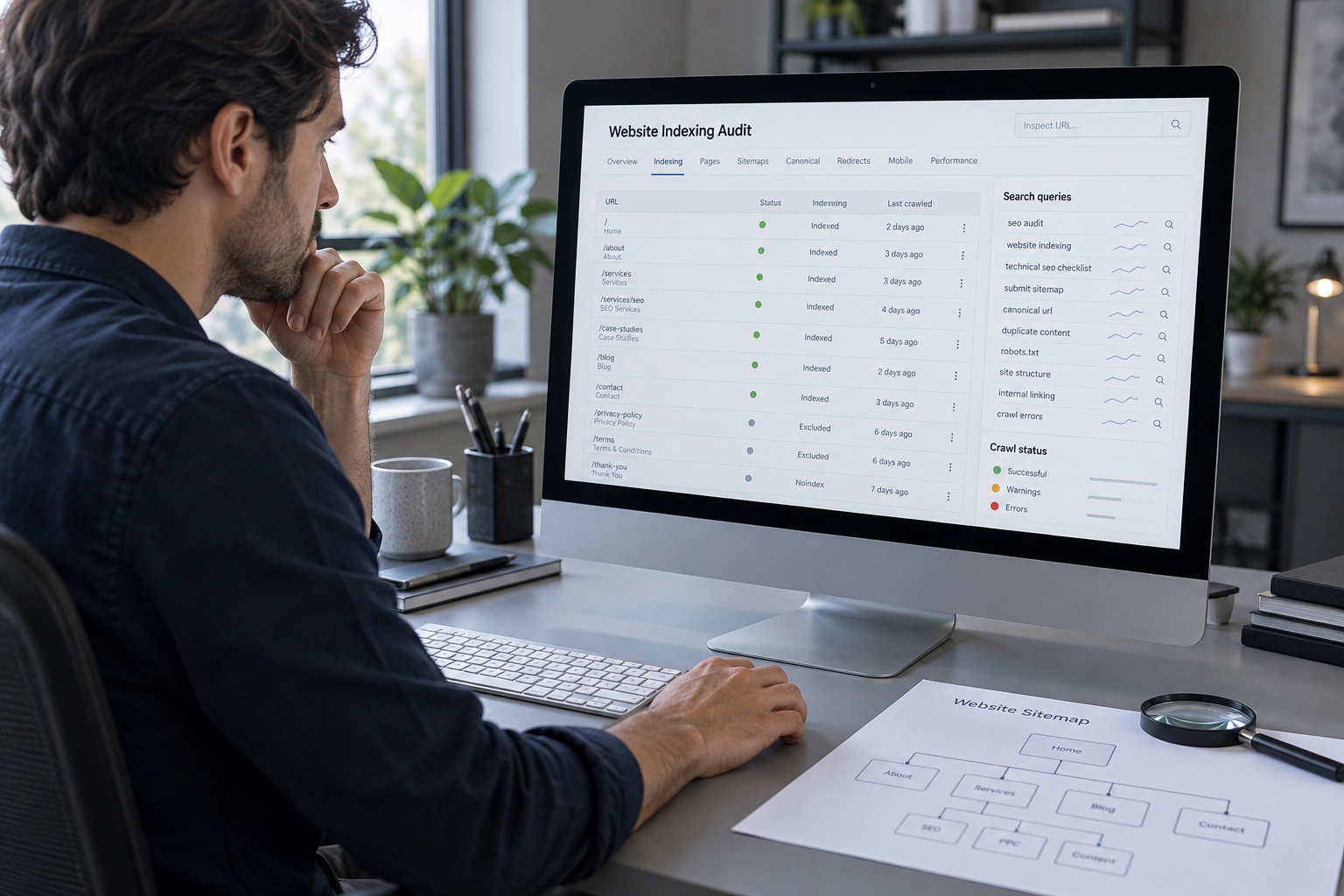
People search with a need in mind. Build pages that answer that need clearly, then make it easy to contact you, visit your location or explore your offer.
Prioritise searches that relate to your services, customers and operating area.
Improve content, site structure and technical issues that limit discovery.
Review search clicks alongside organic visits and relevant website actions.
Identify the pages and issues with the clearest business relevance. Work through a prioritised plan and review progress over time.
Understand how customers describe their needs. Group relevant searches around your services and the pages best placed to answer them.
Review crawlability, indexing, redirects and page structure. Prioritise fixes that help search engines access and understand useful content.
Improve service pages, headings and internal links. Create a content plan around useful answers and a clear route to your offer.
Review readability, navigation and page performance on mobile. Help customers move from search to the information they need.
For location-based businesses, align service and location information with the areas you serve. Discuss your Google Business Profile as part of the scope.
Use Search Console and Google Analytics to review visibility, visits and enquiries. Explain what changed, what needs attention and what comes next.
See the searches that bring visits. Use customer intent to refine page titles and useful content.
| Query | Clicks | Impressions | CTR |
|---|---|---|---|
| restaurant near me | 900 | 22,000 | 4.09% |
| seasonal dinner menu | 720 | 17,000 | 4.24% |
| book a restaurant table | 450 | 10,000 | 4.50% |
| your restaurant | 270 | 3,000 | 9.00% |
No matching rows.
Illustrative interface and data. No live account connected.
| Reason | Source | Pages | Status |
|---|---|---|---|
| Page with redirect | Website | 2 | Review |
| Excluded by noindex | Website | 1 | Review |
| Indexed pages | 12 | Valid |
No matching rows.
Illustrative interface and data. No live account connected.
Illustrative interface and sample data. Not a client case study or a connected account.
AI capabilities
A keyword list alone does not tell a writer what to create. AI can group search intent, turn recurring questions into a page brief and summarise changes in connected search data. Specialists verify sources and prioritise useful content, then measure how it performs.
Separate “near me”, menu and booking searches into useful groups. AI proposes page or campaign themes, helping specialists turn a keyword list into an actionable plan.
Turn customer questions into a page outline, key messages and an editorial checklist. Your team starts with a structured brief grounded in approved sources.
“Which pages gained search clicks this period?” AI can summarise impressions, clicks and position changes from connected Search Console data. The specialist checks the queries and pages behind the movement; tracked enquiries, when available, are reviewed separately from search clicks.
AI options depend on product edition, connected data and agreed scope. Your team reviews drafts before orders, messages or changes are submitted.
Discuss AI optionsYour consultation starts with your business goals. Agree priorities, deliverables and how success will be reviewed before moving into production or campaign activity.
Review your audience, offer and current brand or digital channels. Identify the gap that matters most to your next stage.
Confirm the proposed work, budget, responsibilities, timeline and approval steps. Separate service fees from media spend and third-party costs.
Review the agreed deliverables and relevant performance signals. Use what you learn to decide the next improvement.
Share your website, key services and target area. ATC can help identify SEO priorities and a realistic plan for improving your search presence over time.
Discuss my SEO priorities →Share your website, target markets, priority products and search goals. Include existing search reports if available.
List your brand assets, existing content and relevant website or campaign accounts. Agree who provides materials, approves work and grants account access.
Confirm deliverables, revision rounds, timing, reporting and handover. Separate service fees from media spend, hosting and third-party costs where applicable.